Important: This information is being shared while it's still available — thousands have already seen it
For People Struggling With Swollen Feet & Ankles
How to reduce swelling in your ankles and feet — with a simple and effective method
A study by Georgetown University researchers discovered a factor that can help your body release retained fluid naturally — without relying on compression socks, extreme diets, or medication.
Many people notice their swelling goes down faster than expected once they target the real cause.
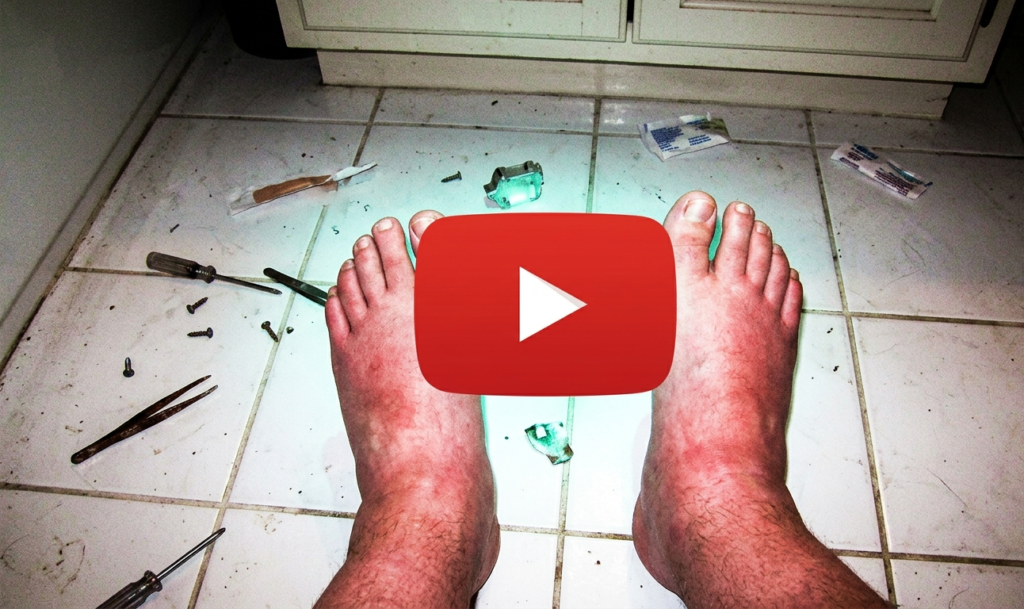
For educational purposes only—not a substitute for medical care.
If any of this sounds familiar, keep reading:
- By late afternoon, your feet feel like they’re about to burst through your shoes
- You wake up and the first thing you check is how swollen your ankles are
- Your socks leave deep marks that take hours to fade
- You’ve quietly stopped wearing certain shoes — or going certain places — because of the swelling
- You’ve tried compression socks, cutting salt, drinking more water… and the puffiness keeps coming back every single day
- Walking feels heavier than it used to — your feet drag, your ankles ache, and by evening you just want to sit down and keep your legs up
The part nobody tells you
Everything You’ve Tried Wasn’t Wrong — It Was Just Aimed at the Wrong Target
There’s a reason compression socks push the swelling up your leg instead of making it disappear. A reason cutting salt helps for a day but never really fixes it. A reason water pills stop working — or leave you exhausted and depleted.
None of those things address why your body is holding onto fluid in the first place.
"The swelling isn't the problem. It's a signal. The problem is upstream — and according to emerging research, it's a lot more fixable than most doctors suggest."
The simple explanation
Think of It Like a Clogged Drain — Except the Clog Is Hormonal
Your body has a natural drainage system. When it’s working, excess fluid moves through tissues, gets processed by your kidneys, and leaves. When something blocks it, fluid backs up — right into your ankles, feet, and calves, because gravity pulls it to the lowest points.
The Hormonal Trigger
There’s a hormone called AVP that controls how your kidneys manage fluid. Researchers call it your body’s “fluid traffic cop.”
When AVP is balanced, everything flows normally. But when your body starts overproducing it — which can happen for a range of reasons — it sends a constant signal to your kidneys to keep pulling fluid back into your bloodstream.
That excess fluid has to go somewhere. And because of how circulation works in the human body, it collects in the lowest points: your legs, ankles, and feet.
This is why the swelling follows gravity. Why it’s worse at night. Why elevating your feet helps temporarily — but the moment you stand up, it all comes rushing back. The hormone is still firing. The drainage is still blocked.
Researchers at Georgetown University School of Medicine have published findings on this exact mechanism — and what emerged from that research is a technique that works directly on the hormonal trigger. Not by masking the swelling. By addressing what’s causing the backup.
The researchers described it as a 7-second fluid-release approach — and it has nothing to do with medication, compression devices, or dietary restriction.
A new approach
The discovery
Rather than forcing fluid drainage, this method supports the body in restoring its natural equilibrium, letting excess fluid clear out on its own.
Noticeable results are often reported in just days.
If you’re fed up with temporary solutions, this presentation reveals an approach that targets the actual reduction of swelling, not just a temporary disguise.
Frequently Asked Questions
1.What is this presentation actually about?
It’s a free, plain-English explanation of a hormonal mechanism that researchers believe may be behind persistent ankle and foot swelling — and why most common approaches don’t address it at the source. There’s no sales pitch upfront. Just the explanation, so you can decide what to make of it.
2.I’ve already tried compression socks, cutting salt, drinking more water. Why would this be any different?
That’s exactly the point the presentation addresses. Those approaches manage the fluid after it’s already built up — they don’t ask why the body is retaining it in the first place. The video focuses on a different layer of the problem entirely. Whether that distinction matters for your situation is something you’d be able to judge after watching.
3.Is there any cost to watching?
None. The presentation is completely free to watch and there’s no obligation attached to it. You don’t need to enter a credit card or sign up for anything to see it. Just click, watch, and take whatever’s useful.
4.Is this going to be worth my time, or just another dead end?
We won’t make that promise for you. What we can say is that most people who watch it tell us it was the first time someone explained the hormonal side of swelling — something their doctors never brought up. At minimum, you’ll understand your body better than you did before. That alone is worth a few minutes.